



Dates are popular fruits celebrated for their natural sweetness, rich flavour, and impressive nutrient profile. Native to the Middle East, dates have been a dietary staple in various cultures for thousands of years. Beyond their versatility in cooking, dates are known as a natural sugar substitute and may help regulate blood sugar. This article explores the Glycaemic Index (GI) and Glycaemic Load (GL) of different date varieties and their impact on diet, especially for people with diabetes or blood sugar concerns.
Difference GI and GL
Below is the overview of key differences:
| Glycaemic Index (GI) | Glycaemic Load (GL) |
| Measures how quickly a food containing carbohydrates raises blood sugar levels. | Considers both the GI and the quantity of carbohydrates. |
| Ranked on a scale from 0 to 100. | Provides a more comprehensive effect on blood sugar levels. |
| Categories:
· Low (Below 55), · Medium (56-69), · High (70+) |
Categories:
· Low (10 or less), · Medium (11-19), · High (20+) |
| High-fibre and whole-grain foods tend to have lower GI. | Larger portions, even of low-GI foods, can result in high GL. |
According to the American Diabetes Association, it is important to monitor portion sizes, especially when consuming high-carbohydrate foods like dates, since even low-GI foods can cause a spike in blood sugar if eaten in large quantities.
Glycaemic Index and Load of Popular Date Varieties
A study conducted at Qassim University examined the glycaemic properties of 17 different varieties of dates popular in Saudi Arabia. Thirty minutes after ingestion, blood sugar levels initially rose, followed by a gradual decline. The Glycaemic Index (GI) of dates can vary depending on their type and ripeness, as of below:
| Category | Varieties | Glycaemic Index (GI) Value
(if available) |
Glycaemic Load (GL)
(if available) |
Impact on Blood Sugar |
| High-GI Dates | Medjool, Wanan | 71.0 – 74.6 | – | Raises blood sugar quickly |
| Low-GI Dates | Sokari, Kholas, Segai, Khidri | 42.8 – 44.6 | – | Less likely to cause spikes |
| High-GL Dates | Sellaj | 71 | 24 | Rapidly increases blood sugar levels
|
| Low-GL Dates | Ajwa | – | 8.5 | Better for blood sugar level management |
Glycaemic Index of Dates vs Sugar
Dates have a lower sugar impact than table sugar, as illustrated in the chart below.
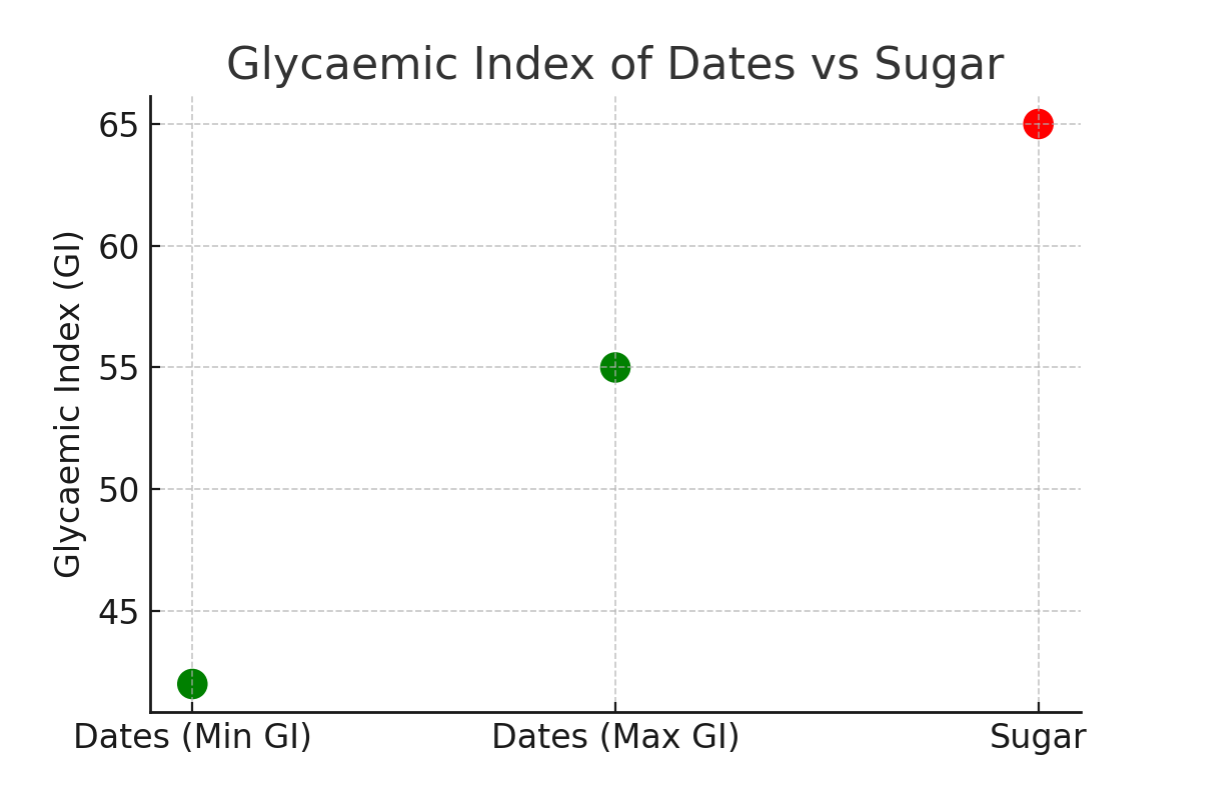
This difference primarily stems from the high fibre content in dates, which slows down glucose absorption. The soluble fibre in dates moderates the rate at which blood sugar levels rise, resulting in a slower and more sustained energy release compared to the rapid spike triggered by table sugar.
Incorporating Dates into a Balanced Diet
Moderation is essential for enjoying the health benefits of dates, especially for those monitoring their blood sugar levels. Here are some tips for including dates in a healthy diet:
- Portion Control: To keep the GL within a manageable range and maintain stable blood sugar levels, it is advisable to consume 1-3 dates per serving.
- Pair with Proteins and Fats: Combining dates with a protein or healthy fat source, such as nuts or seeds, can help slow sugar absorption and prevent rapid blood sugar surges.
- Use as a Healthy Sweetener: Dates make a great alternative to processed sugar, adding natural sweetness along with essential nutrients to dishes.
- Balance with Low-GI Foods: Including low-GI foods in the same meal can help balance the overall glycaemic impact.
Benefits of Low-GI Dates for Everyone
Low-GI dates are beneficial for:
- People with diabetes, as they help regulate blood glucose levels.
- Individuals managing weight, as they provide longer-lasting fullness.
- Athletes, for sustained energy and endurance.
- People at risk of chronic diseases, as dates support immunity and overall health.
Conclusion
Dates are naturally sweet and nutrient-dense, with a low-to-moderate glycaemic index and varying glycaemic load based on portion size. They can be included in a balanced diet with portion control. Opting for low-GI varieties like Ajwa and Sokari is recommended for better blood sugar management. As with all foods, moderation is key to enjoying their health benefits without causing significant spikes in blood sugar.
